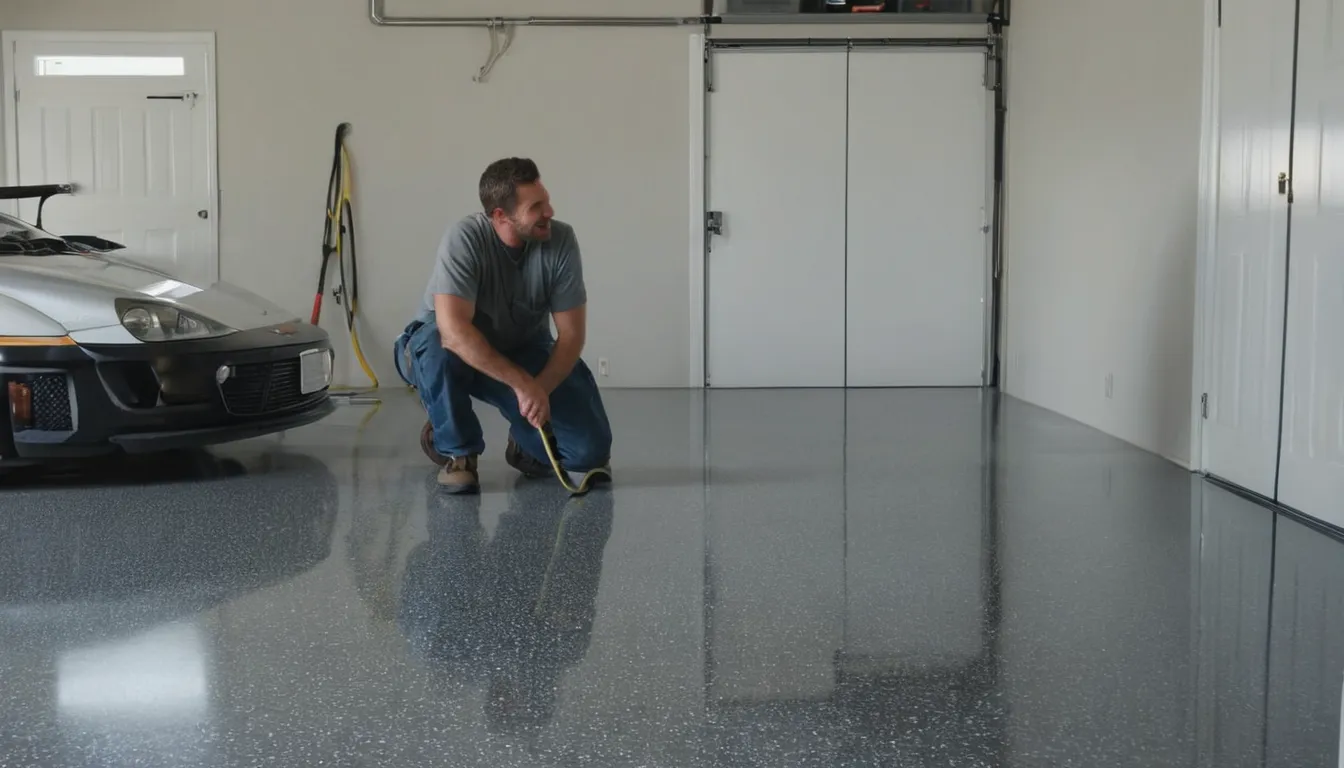
Epoxy garage floors turn bare, porous concrete into a sealed surface that is easy to sweep and wipe clean. Left uncoated, a slab soaks up oil, road salt and moisture. Stains set within days. Dust and pitting follow over the seasons. Cold winters and damp springs make it worse. A coating can stop that cycle, but only when the slab is prepared first. Systems range from solid colors to flake blends and custom floor finishes.
Trashtheatre Floor Coating is a referral service. It connects homeowners in Lake Forest and the Lake Forest area with independent local providers who do the work. This page lays out the order of steps: inspect, call, compare, schedule. Use it to ask clear questions, read quotes with confidence, and understand why cure time counts before you agree to anything.
First, the Slab: A 5-Minute Check
Walk the garage floor before you call anyone. Bring a flashlight and your phone for photos.
- Look for oil spots, rust rings and white powder.
- Find cracks and note which ones are wider than a pencil line.
- Rub a hand across the floor. Does gray dust come off?
- Check the door edge and corners for damp patches.
- Watch for spots that stay wet long after rain.
Write down what you find. A provider will ask for it.
What Bare Concrete Does, Hour by Hour
Concrete looks solid, but it is not sealed. Here is the order of events on an uncoated garage floor.
Hours 0 to 24: Spills Soak In
Oil, antifreeze and salty slush start moving into the pores within hours. Blot the spill. Then cover it with absorbent. Do not spread it around with a hose.
Days 2 to 14: Stains Set
What soaked in now bonds with the surface. Tire marks turn gray or yellow. Rust rings darken. Cleaning gets harder each day you wait.
Weeks to Months: Dust and Pitting
The top layer wears away. You get fine dust on shoes and car doors. Small pits show up where salt sat.
Each Season: Frost, Heat and Damp
Cold winters with deep frost push moisture through the slab and widen cracks. Hot, humid summers keep the floor clammy. Spring flooding and storm runoff can leave water at the door line. A coating cannot fix a slab that is shifting. It can stop new surface damage early.
Seen enough? Request a callback to check provider availability in the Lake Forest area. Calls are answered Mon-Fri 9am-9pm ET.
Why Prep Matters More Than the Product
A coating is only as good as what it grips. Skipped prep is the most common reason epoxy peels.
Indoor jobs like hardwood flooring installation start on a dry, level subfloor. A garage slab rarely gets that. So the order matters:
- First, grind or shot-blast the surface so the coating can bite.
- Next, fill cracks and pits.
- Then test for moisture rising through the slab.
- Last, vacuum away every bit of dust.
Ask, then compare. A quote that skips grinding is a quote to question.
Common Epoxy Floor Systems
Pick the look and wear level first. Then match the system.
- Solid color: One clean shade. Simple and straightforward.
- Flake or chip: Colored chips are scattered into wet epoxy. They hide dirt and add grip.
- Metallic: Swirled pigments that give a deep, glossy look.
- Quartz: Textured, tough and suited to heavy use.
Many providers also offer custom floor finishes, such as border lines or blended colors. Ask to see a sample board under your own garage light.
What a Typical Install Looks Like
Most jobs follow this order. Timing varies by product and weather.
- Start: Grinding, crack repair and cleanup.
- Next: Primer, then the epoxy base coat.
- Then: Flakes or color, followed by a clear topcoat.
- Last: A walkthrough and care notes.
Some providers finish in a couple of days. Others need longer for a rough or damp slab.
Cure Time Counts
Epoxy needs time to harden. Rushing it ruins the finish.
- Light foot traffic: often after about a day.
- Vehicles: usually after several days, per the product.
- Full cure: around a week or more.
Cold garages cure slowly. Ask the provider for exact times for your product and season. Keep pets, bikes and wet boots off until you are told it is safe.
Topcoats and Sunlight
Sun through garage door windows can yellow some epoxy over time. A UV-stable clear topcoat helps hold the color. It also adds scratch and chemical resistance. Ask which topcoat is planned and why.
Get the Garage Ready
- Empty shelves, wall items and stored boxes.
- Move all vehicles out for the whole job.
- Clear a path to the garage and a power source.
- Point out any floor drain or sump area.
- Plan where kids and pets stay.
Caring for the New Floor
- Sweep or dust mop each week.
- Wipe spills when you see them.
- Use a mild cleaner and a soft mop.
- Skip harsh acids and steel brushes.
- Put mats under jack stands and heavy tool carts.
Questions to Ask a Provider
Use the same list for every quote.
- How will you prep the slab? A good answer names grinding or shot-blasting, not just a wash.
- Do you test for moisture? A good answer says yes and explains the plan if readings run high.
- What products and thickness? Look for product names in writing.
- What are the cure times? Expect real numbers, not "soon."
- What does the warranty cover? Get it on paper.
Red Flags
- No mention of grinding.
- A price with no square footage or product listed.
- Pressure to sign on the spot.
- No written quote.
- Vague answers about moisture.
Next: Call, Compare, Schedule
First, finish your slab notes. Next, call. Then gather two or three written quotes and schedule the provider that fits your list.
Request a callback to check provider availability, or request an estimate online.
What's Included
Slab Prep
Grinding, crack filling and dust removal so the coating bonds to clean concrete.
Base Coat
Primer and epoxy rolled on in an even layer, with color or flakes added.
Clear Protective Topcoat
A final layer that adds sheen and helps resist scratches, chemicals and sunlight.
Final Walkthrough
A look at the finished floor, plus cure times and care notes.
Typical U.S. Epoxy Garage Floor Costs
These are broad U.S. ranges. Your price depends on slab condition, garage size, system and local rates. Get a written quote from each provider and make sure prep steps are listed line by line.
| Item | Typical range | Notes |
|---|---|---|
| Basic epoxy, per sq ft | $3 – $7 | Solid color, standard prep |
| Flake system, per sq ft | $5 – $12 | Adds grip and hides dirt |
| One-car garage | $1,200 – $3,000 | Roughly 250 sq ft |
| Two-car garage | $2,000 – $5,500 | Roughly 500 sq ft |
| Crack and pit repair | $200 – $800 | Depends on how many |
| Moisture testing | $50 – $300 | Mitigation costs more |
How It Works
Check Your Slab
Note stains, cracks, dust and damp spots. Take photos so you can describe the floor clearly.
Call and Describe It
Request a callback to check provider availability and share your notes.
Compare Written Quotes
Line up prep steps, products and cure times from each quote.
Schedule and Prepare
Pick a provider, clear the garage and plan around cure times before work begins.
Why Call Trashtheatre Floor Coating
Clear Order
Inspect, call, compare, schedule. Each step builds on the one before it.
Plain Questions
Simple questions help you read quotes and spot weak answers.
Local Providers
Independent providers in our network work in your area and climate.
No Obligation
Request an estimate and compare. You decide whether to go ahead.
Other Services
Need epoxy garage floors in Lake Forest?
Request a callback to check provider availability, or send the request form. Calls are answered Mon-Fri 9am-9pm ET.
Phone lines open Mon-Fri 9am-9pm ET · No obligationEpoxy Garage Floors FAQ
- How long does an epoxy garage floor take to cure?
- Many floors take a light foot walk after about a day. Vehicles often wait several days. Full cure can take a week or more. Cold weather slows it, so ask the provider for exact times.
- Can epoxy be applied over a cracked or stained garage floor?
- Often yes, after prep. A provider grinds the surface, fills cracks and treats oil stains first. Active moisture or a shifting slab can cause failure, so ask about moisture testing before you agree.
- Why does epoxy peel in a garage?
- Peeling usually traces back to weak prep, moisture rising through the slab, or hot tire marks on a thin coat. Grinding, moisture testing and the right product reduce the risk.
Request a callback
Request a callback to check provider availability, or send the request form. Calls are answered Mon-Fri 9am-9pm ET.
Phone lines open Mon-Fri 9am-9pm ET · No obligation